Book a walkthrough and we'll show you how it applies to your own content.
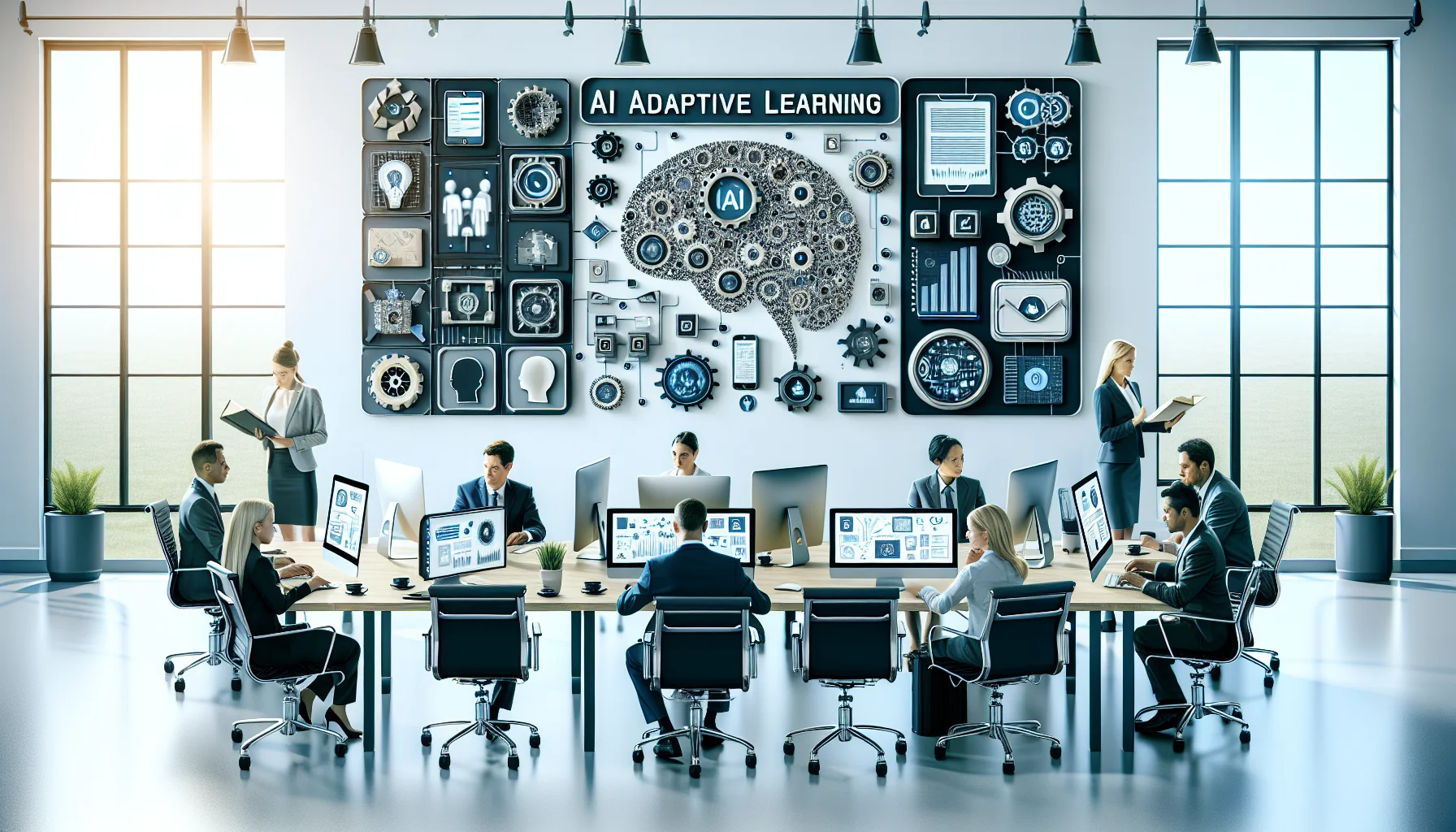
AI adaptive learning uses algorithms, recommendation engines, adaptive testing and NLP to tailor training to role, skill gaps, and behavior. This article explains vendor use cases, integration and privacy needs, presents a three-step pilot plan, and provides an ROI checklist to help L&D teams test, measure, and scale personalized training.
AI adaptive learning blends machine intelligence with instructional design to deliver personalized training that maps to each employee's skills, role, and pace. In our experience, organizations that combine learning science with data-driven models reduce time-to-competency while improving retention and engagement. This article explains the mechanics of AI adaptive learning, practical vendor use cases, integration considerations, data needs, ethics, a three-step pilot plan, and a direct ROI checklist you can use immediately.
Adaptive learning is a design approach where content and assessments change in real time to match a learner's needs. When paired with AI, adaptive learning becomes dynamic: algorithms analyze performance, behavior, and context to decide what content a learner should see next. That’s the core promise of AI adaptive learning — not just delivering content, but delivering the right content, in the right way, at the right time.
We've found that adaptive systems fall into three operational models: rule-based branching, hybrid models (rules + ML), and fully data-driven personalization. Rule-based systems are predictable and easy to audit; ML-driven systems scale personalization across millions of interactions. For most enterprise L&D teams, a hybrid model balances explainability and effectiveness.
Organizations report faster onboarding, fewer repeat assessments, and higher course completion when courses adapt to skill gaps. Studies show that tailored feedback increases retention by up to 60% compared to one-size-fits-all courses. Using AI adaptive learning effectively turns training from a broadcast into a conversation with the learner.
Understanding the specific AI approaches helps L&D leaders choose the right platform. Here are the most impactful techniques used in AI adaptive learning systems:
In practice, these components form a loop: data from assessments feeds the recommendation engine and predictive models, which update the learning path. This continuous loop is the operational heart of AI adaptive learning and is critical for sustained improvement.
Vendors apply AI adaptive learning in different verticals and use cases. Two concrete examples illustrate the range of outcomes:
Vendors vary on how they implement and surface these capabilities. Some platforms emphasize content libraries and authoring tools, while others emphasize analytics and workflow integration. In our experience, platforms that combine robust authoring, real-time analytics, and configurable rules work best for enterprise deployments. For example, several providers show cohort analytics and engagement triggers (Mentora LMS's dashboards show how cohort-level adaptivity correlates with completion rates.) Other well-known platforms include enterprise LMS vendors that offer modular adaptive components and specialist adaptive learning providers focused on microlearning and assessment.
Common AI use cases in corporate learning include:
These examples highlight how AI adaptive learning can align learning outcomes with business metrics, not just completion rates.
Adopting AI adaptive learning requires careful integration planning. The technical and data layers determine how well personalization will perform and whether insights are actionable.
Key data sources that power adaptive systems include LMS activity logs, assessment records, HRIS role and tenure data, performance management outcomes, and contextual signals from business tools (CRM, ticketing). The quality and schema consistency of these sources directly affect model accuracy.
Privacy and ethics are central. Implement these practices:
Addressing explainability helps with adoption. Provide learners and managers with plain-language rationales for recommendations and an option to override system choices. This balances automation with human judgment and reduces resistance to AI adaptive learning.
Launching a targeted pilot is the fastest way to demonstrate value from AI adaptive learning. Use this concise three-step plan:
We've found that running two iteration sprints within the pilot uncovers the most meaningful improvements. Use A/B comparisons and cohort analytics to isolate the effect of personalization from other variables.
Typical mistakes include overcomplicating the initial model, underestimating content authoring effort, and ignoring change management. Keep the pilot narrow, prioritize measurable outcomes, and provide human support alongside automated recommendations.
To justify investment, focus on measurable business impacts. Use this checklist to estimate ROI for AI adaptive learning projects:
Quantify both direct savings (reduced training hours x hourly rate) and indirect value (faster ramp to revenue-generating activities or lower compliance risk). Present scenarios: conservative, probable, and aggressive to set stakeholder expectations.
Many L&D leaders are skeptical about AI recommendations. Two strategies win trust:
Explainability reduces perceived risk and improves adoption. When you combine transparent rules with targeted ML components, stakeholders see both the logic and the lift — increasing confidence in the outputs of AI adaptive learning.
AI adaptive learning is a pragmatic way to make corporate training more efficient, targeted, and measurable. By combining recommendation engines, adaptive testing, and NLP-driven assessments, organizations can deliver genuinely personalized training that aligns with business outcomes. Integration requires careful data planning, transparent governance, and a focused pilot to validate impact.
Use the three-step pilot plan and ROI checklist above to start small, measure rigorously, and scale where the data shows clear gains. In our experience, teams that prioritize explainability and human oversight see faster adoption and clearer business returns. If you’re ready to test a small, measurable use case, start by mapping the skills you need most and designing a short pilot to prove value — then iterate outward.
Next step: Choose a single high-impact role, define one measurable competency, and run the three-step pilot described above. Monitor the KPIs listed in the ROI checklist and schedule a review after 12 weeks to decide whether to scale.
The Mentora LMS Team provides actionable insights on technology and business strategy.
 Ai
AiJanuary 6, 2026
This article defines core AI collaboration skills—prompt engineering basics, AI literacy, data interpretation, model judgment, and soft collaboration abilities—and three competency levels with sample learning activities. It offers role-based skill maps, two upskilling case paths with time-to-competency estimates, and tactics to reduce mismatch, training fatigue, and retention loss.
 Business Strategy&Lms Tech
January 25, 2026
AI adaptive learning uses real-time assessment, content branching, and spaced repetition to create personalized learning paths that shorten time-to-proficiency, reduce remediation, and improve retention. The article maps these mechanisms to adult learning theory, provides mini case studies (healthcare, customer service), and offers a practical seven-step implementation checklist and measurement tips.
 Psychology & Behavioral Science
January 12, 2026
AI-driven recommendations ingest interactions, assessments, and contextual signals to rank next-best learning actions and retrain via continuous feedback. Versus static curricula, they scale individualized pacing, reduce decision points for learners, and improve measurable outcomes (e.g., 22% faster time-to-mastery, 18% higher 30-day retention) when paired with strong data hygiene and governance.
 Ai
AiDecember 28, 2025
Adaptive learning AI offers continuous, data-driven tutoring that personalizes pathways, shortens time-to-proficiency, and frees teacher time for targeted instruction. The article outlines value, cost models, funding sources, pilot case results (up to 18% mastery gains), and a three-phase adoption timeline to help districts build an evidence-driven business case.