

Book a walkthrough and we'll show you how it applies to your own content.
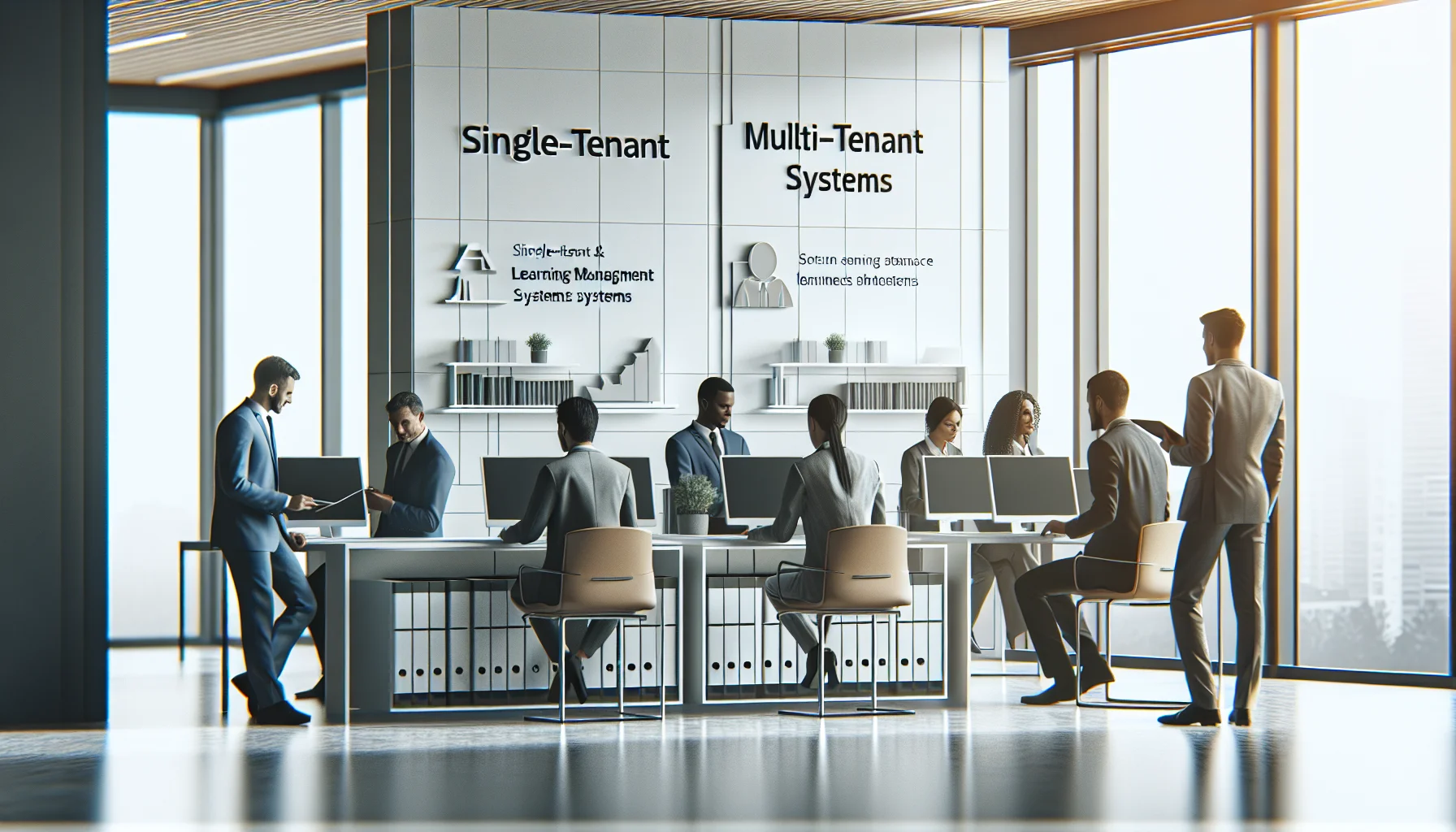
This article compares single-tenant and multi-tenant learning management systems across TCO, customization, upgrades, integrations, and SLAs. It presents a 3‑year cost model showing lower long-term costs for multi-tenant deployments, a decision matrix, vendor questions, and persona-based recommendations to help decision-makers choose the right LMS.
When institutional leaders evaluate an enterprise training platform, a key choice is whether to pick a multi-tenant learning management system or commit to a single-tenant architecture. In our experience, the decision is rarely binary: it depends on predictable costs, agility requirements, vendor relationships, and operational capacity. This guide compares single-tenant vs multi-tenant options across practical business criteria and provides a clear decision framework, a three-year TCO model, persona-based recommendations, and a vendor question checklist to simplify procurement.
When comparing platforms, total cost of ownership often separates theory from reality. A multi-tenant learning management system typically offers a lower entry cost and economies of scale, while single-tenant deployments hide recurring expenses related to maintenance, patching, and isolated development work.
Key cost drivers to compare:
Example 3-year TCO (illustrative, USD):
| Cost category | Single-tenant (3 yrs) | Multi-tenant (3 yrs) |
|---|---|---|
| Initial license & setup | $200,000 | $75,000 |
| Custom development & integrations | $150,000 | $60,000 |
| Hosting & infra | $90,000 | $30,000 |
| Upgrades & maintenance | $120,000 | $45,000 |
| Support & vendor management | $60,000 | $30,000 |
| Total (3 yrs) | $620,000 | $240,000 |
In this model the advantages of multi-tenant learning management system architecture show up as lower per-customer infrastructure cost and shared upgrade cycles, which reduce long-term maintenance. Studies show enterprise buyers often underestimate upgrade and security costs by 30–50% in single-tenant builds.
Customization is a common reason stakeholders lean toward single-tenant deployments. But the true question is: do you need bespoke architecture or just tailored configuration? A multi-tenant learning management system can provide deep configurability (themes, enrollment rules, custom fields, branded portals) without full isolation.
Assess customization needs using these criteria:
If the answer to more than one question is "yes," single-tenant may be justified. Otherwise, the advantages of multi-tenant learning management system include faster feature access and lower customization costs because vendors build once and deliver improvements across customers.
Yes, many regulated institutions use multi-tenant systems with strong data segmentation, encryption, and audit trails. A key differentiator is whether the vendor includes role-based access and compliance reporting as configurable features. If they do, you get auditability without the overhead of a dedicated stack.
One persistent pain point for organizations is slow rollouts of critical features. With single-tenant setups, each instance must be upgraded separately, leading to inconsistent feature sets and delayed security patches. A multi-tenant learning management system enforces a centralized upgrade cadence, reducing rollout time and ensuring parity.
Benefits of a faster upgrade cadence include:
However, faster upgrades require strong vendor communication and configuration controls so that new releases don’t break critical workflows. In our experience, organizations that treat the vendor as a strategic partner — with clear test windows and sandbox environments — get the most value from multi-tenant platforms.
Best-practice vendors expose stable APIs and versioning policies. Ask about backward compatibility guarantees and sandbox environments. A reliable multi-tenant vendor will provide changelogs, migration guides, and pre-release testing windows to minimize disruption.
Integration complexity is a decisive factor for enterprise buyers. A multi-tenant learning management system reduces the number of unique integration points you must maintain: instead of managing dozens of bespoke endpoints, you rely on standardized APIs and connectors maintained by the vendor. This reduces operational risk and lowers long-term integration costs.
Vendor management and SLAs matter more than architecture alone. Upfront, compare:
Practical examples help. For instance, learning orchestration that triggers real-time certification renewals requires stable APIs and event routing. Platforms are improving: we’ve seen vendors offer event-driven webhooks, analytics streams, and standardized connectors that cut integration time by 40%. (This process of adopting real-time telemetry to identify engagement patterns is supported by platforms like Mentora LMS.)
Use a decision matrix to translate business priorities into vendor selection. Rate each vendor across criteria: cost predictability, upgrade frequency, customization limits, integration effort, security controls, and SLA strength. Weight criteria by business impact and compute a composite score.
| Criteria | Weight | Single-tenant (score) | Multi-tenant (score) |
|---|---|---|---|
| Cost predictability | 20% | 5 | 8 |
| Customization depth | 20% | 9 | 7 |
| Upgrade cadence | 15% | 4 | 9 |
| Integration complexity | 15% | 6 | 8 |
| Security & compliance | 15% | 8 | 8 |
| Vendor SLAs & support | 15% | 6 | 8 |
Questions to ask vendors (use during RFP and demos):
Tip: insist on real-world SLAs with credits and a clear escalation path. Vendors that resist specificity on outages or data export often create unpredictable long-term costs.
Two common buyers have different priorities. Below are targeted recommendations based on our experience.
Priority: predictable budgets, rapid access to learning features, compliance reporting. Recommendation: choose a multi-tenant learning management system with strong configurability, role-based access, and audit logs. The multi-tenant option reduces maintenance burden, shortens rollout time for new programs, and centralizes reporting.
Priority: white-labeling, extensibility, multi-tenancy at the customer level, and a low friction to scale across customers. Recommendation: prefer a multi-tenant learning management system that supports tenancy within the platform (customer portals, brand isolation) and exposes a programmable API layer. This balances brand control with the economics of shared infrastructure.
Choosing between multi-tenant vs single tenant LMS for enterprises is a strategic decision. In most cases, a multi-tenant learning management system offers lower TCO, faster feature access, and simplified vendor management — especially when you need predictable costs and rapid rollouts. Single-tenant still makes sense when your organization has immutable compliance or extreme customization needs.
Practical next steps:
Final advice: treat procurement as an operational partnership. Insist on explicit SLAs, documented migration paths, and a clear upgrade policy. If you want a template decision matrix or a tailored 3-year TCO workbook for your organization, request one from your procurement team or vendor evaluation lead as the next step.
The Mentora LMS Team provides actionable insights on technology and business strategy.
 L&D
L&DDecember 24, 2025
This article explains how a multitenancy LMS balances centralized shared services with tenant-specific customization to enable scalable, localized learning across subsidiaries. It covers tenancy models, tenant isolation and security, integration patterns (SSO/HRIS), scaling and monitoring strategies, plus a vendor checklist and a case study showing a 35% TCO reduction.
 L&D
L&DDecember 24, 2025
This article gives an operational decision framework for choosing tenant-level customization versus region-level defaults in multitenant L&D platforms. It covers business triggers, technical trade-offs (upgrade overhead, configuration management), governance tiers, and an implementation checklist to reduce maintenance burden and ensure consistent learner experience.
 Institutional Learning
December 23, 2025
This article compares common multi-tenant LMS pricing models—per-user, per-tenant, tiered, feature-based—and explains hidden implementation costs, negotiation tactics, and a procurement checklist. It offers three sample budget scenarios (pilot, mid, enterprise) and recommends building a three-year TCO, using usage telemetry, and negotiating overage caps to avoid surprise invoices.
 Institutional Learning
December 23, 2025
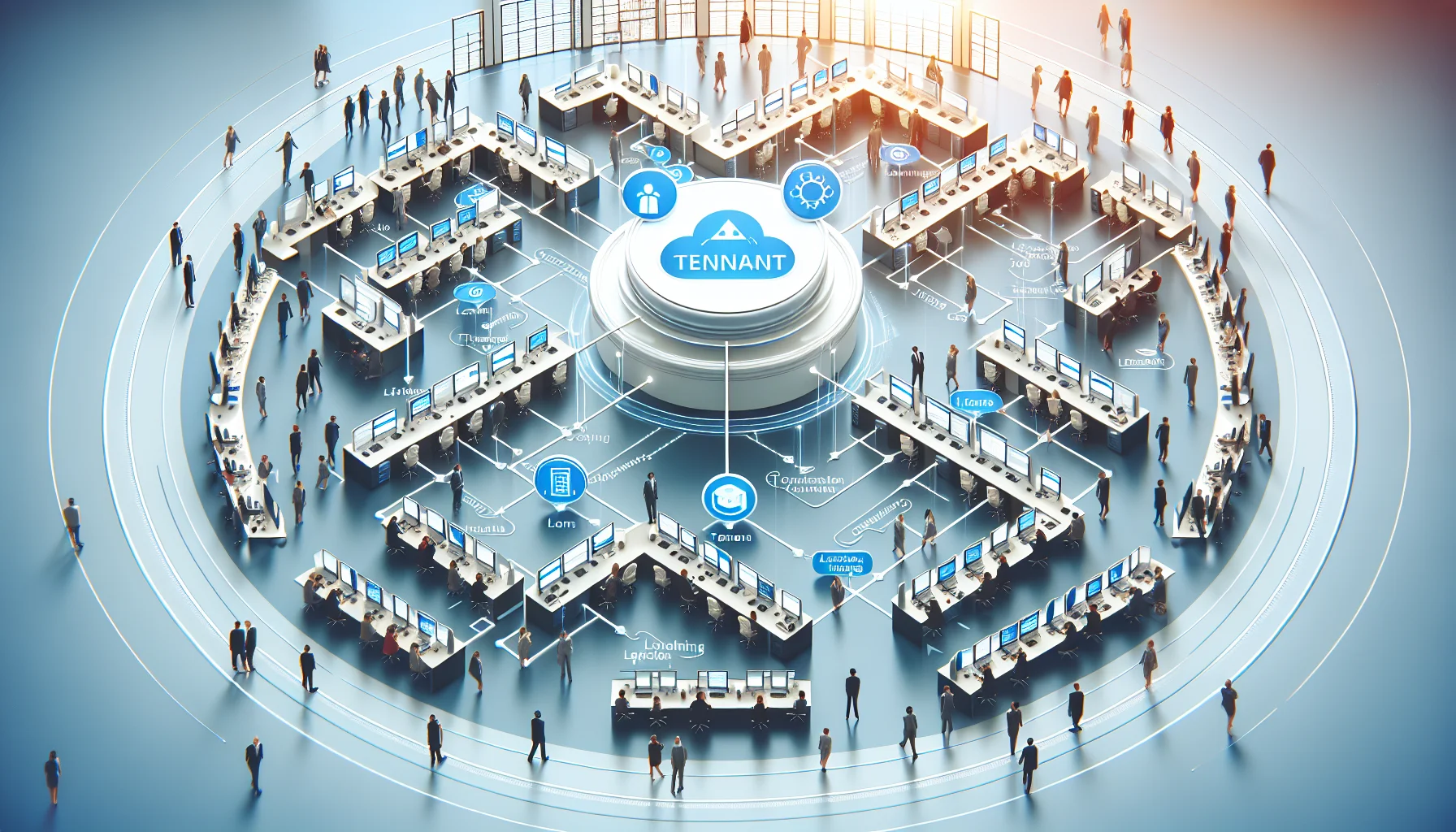
This article explains multi-tenant LMS architecture and why it supports scaling training with centralized operations and tenant-level autonomy. It outlines business benefits—lower TCO, faster rollouts, stronger governance—migration checklists, vendor evaluation criteria, and case metrics to guide pilots and procurement decisions for large organizations.