Book a walkthrough and we'll show you how it applies to your own content.
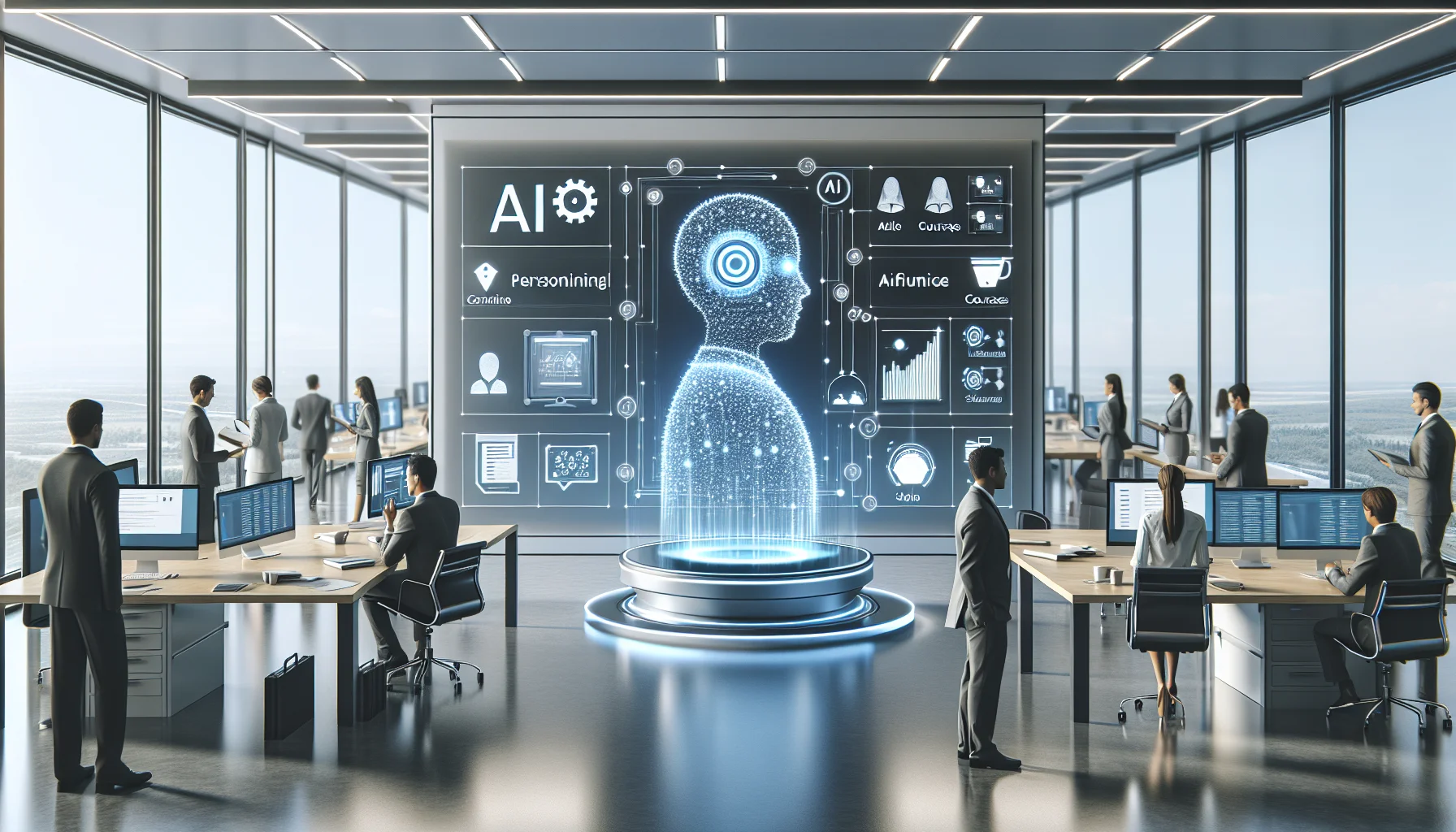
In 2026 simulation training trends emphasize AI-generated scenarios, synthetic data, composable digital twins, and immersive remote exercises. High-risk industries should pilot hybrid AI scenarios, standardize data governance, deploy interoperable twins, and follow a three-year roadmap to scale simulations from pilots to audited, continuous learning programs.
In 2025 the field accelerated from pilot projects to operational programs: large hospital systems adopted scenario libraries, manufacturers deployed digital twins for line optimization, and emergency services used mixed-reality drills at regional scale. These shifts crystallized a set of simulation training trends that will shape safety, compliance, and skills development in 2026. In our experience, the transition from static modules to adaptive, data-driven simulations is the single biggest inflection point. Teams that treat simulation as a continuous learning ecosystem—not a one-off course—see measurable improvements in performance and risk reduction.
This article describes six priority trends, each with practical implications, an adoption timeline, and recommended next steps for high-risk industries. Expect a forward-looking, actionable playbook with examples, pitfalls to avoid, and a concise three-year checklist at the end.
Trend 1: AI-driven scenario generation
AI now generates credible, variable scenarios from incident repositories, equipment logs, and natural language reports. That capability compresses scenario design time and increases scenario diversity, accelerating learning transfer. These developments are central to evolving simulation training trends because they enable personalization at scale.
Trend 2: Synthetic data and generative environments
Access to synthetic sensor streams and procedurally generated environments removes data scarcity for rare but catastrophic events. Synthetic datasets underpin realistic simulator inputs for systems that previously lacked recorded examples.
Trend 3: Cross-industry digital twins
Digital twins are moving from siloed replicas to composable, cross-industry models that combine facility, supply-chain, and human-behavior layers. This modular approach supports joint exercises across stakeholders—e.g., hospital supply networks and emergency responders practicing surge scenarios.
Trend 4: Immersive remote training
Mixed reality and cloud streaming now enable geographically dispersed teams to inhabit the same training event. That change converts isolated tabletop drills into synchronous, immersive operations rehearsals—critical for distributed manufacturing plants and regional healthcare networks.
Trend 5: Ethics, regulation and credentialing changes
Regulators and professional bodies are catching up to simulation capabilities. Expect clearer guidance on simulated evidence for competency, data provenance requirements, and audit trails for AI-generated scenarios. The regulatory arc will affect how organizations validate training outcomes.
Trend 6: Low-cost hardware democratization
Commodity XR headsets, web-based simulators, and affordable haptics reduce entry barriers. Democratization makes it possible for smaller facilities and regional trainers to run high-quality simulations without enterprise budgets.
Two sectors—healthcare and manufacturing—will illustrate how these simulation training trends converge in practice. Each has distinct constraints but shares common adoption patterns: measurable KPIs, regulatory scrutiny, and strong ROI where safety is paramount.
Simulation training trends 2026 for healthcare
In healthcare, AI-driven scenario generation plus synthetic patient data accelerates competency checks for rare complications. We're advising systems to build layered assessments: technical skill, team coordination, and decision-making under uncertainty. Hospitals that integrate simulated outcomes with EHR audit trails can demonstrate continuous improvement during audits.
What's next in manufacturing simulation training
Manufacturers use digital twins for line changeovers, emergency shutdowns, and supply-chain disruption drills. Mixed-reality guides plus simulated PLC telemetry create rehearsals that match operational risk. We've found that coupling simulations to shift handover protocols reduces incidents by establishing predictable responses.
Some of the most efficient L&D teams we work with use platforms like Mentora LMS to automate scenario orchestration, assessment capture, and scalability without sacrificing content fidelity. This illustrates a practical route to integrate toolchains that support continuous simulation programs while retaining oversight.
High-quality simulation is less about fidelity alone and more about repeatability, measurable outcomes, and integration into real workflows.
Adopting the new simulation training trends requires an intentional, phased approach. Below is a simplified roadmap and tactical checklist you can adopt across industries.
| Stage | Objective | Key activities (90/180/360 days) |
|---|---|---|
| Assess | Define risk areas and baseline metrics | Inventory incidents; map competencies; select pilot scenarios |
| Pilot | Validate tools and scenarios | Run small-scale AI/synthetic data pilots; capture assessment metrics |
| Scale | Operationalize training program | Standardize interfaces; deploy device fleets; integrate logs for audit |
| Sustain | Continuous improvement and compliance | Governance cadence; scenario refresh; regulator engagement |
Three-year strategic checklist
Common pitfalls to avoid:
Implementation tips we consistently recommend:
The next wave of simulation training trends in 2026 shifts emphasis from experimental pilots to integrated, measurable programs. High-risk industries that move quickly will gain resilience, reduce incidents, and shorten time-to-competency. Remember: fidelity is a tool, not the objective—repeatability, relevance, and integration with operational systems are.
Final practical checklist:
Call to action: Choose one high-impact scenario today, run a compact pilot that includes an AI-assisted scenario and an evaluation rubric, and schedule a governance review within 90 days to translate results into an enterprise rollout plan.
The Mentora LMS Team provides actionable insights on technology and business strategy.
 Business Strategy&Lms Tech
February 3, 2026
This executive guide explains how generative AI training scales scenario-based simulations with a phased pilot→scale→govern roadmap. It covers core architecture, procurement criteria, risk and ethics controls, KPIs (time-to-competency, error-rate, cost-per-learner), sample ROI math, and a 90-day pilot plan for enterprise adoption.
 Ai
AiFebruary 3, 2026
AI simulation training uses physics-based models, digital twins, and VR/AR to rehearse rare failures safely. Targeted pilots with measurable KPIs reduce error rates, speed time-to-competence, and improve compliance. Implement via a pilot→scale→govern roadmap with vendor selection, data governance, and safety engineering integrated up front.
 ESG & Sustainability Training
January 5, 2026
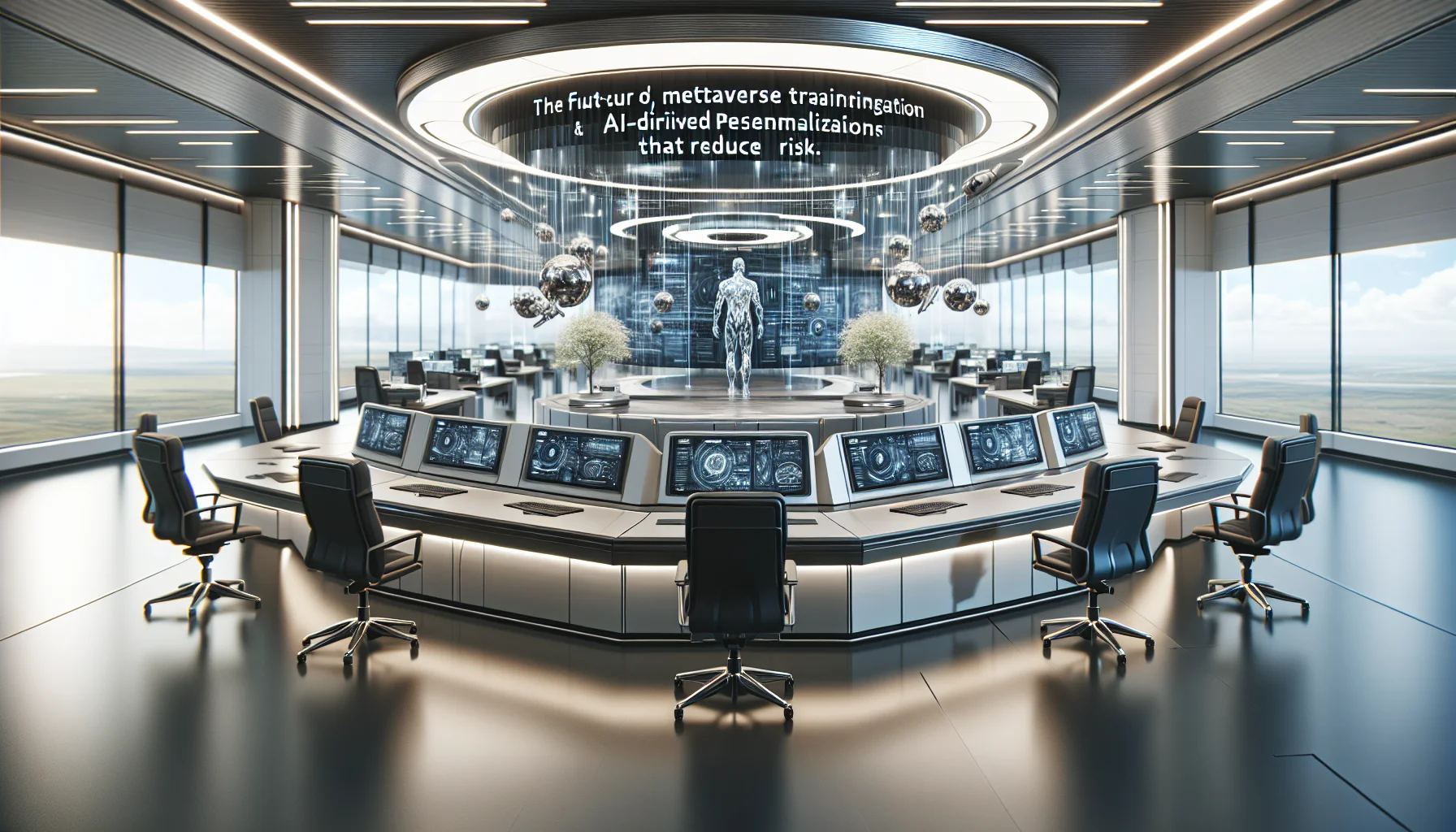
This article describes key future metaverse training trends—AI-driven personalization, synthetic scenario pools, edge-enabled persistent environments, interoperability standards, and mixed reality—and explains how they turn episodic VR drills into continuous risk reduction. It recommends concrete steps: run a 90-day pilot, require model governance and data portability, and form a cross-functional steering group.
 Business Strategy&Lms Tech
February 3, 2026
This article compares real-time simulation AI and batch scenario generation across latency, technical requirements, cost, and training outcomes. It explains when to use real-time, batch, or a hybrid architecture, and provides a decision matrix, cost checklist, and implementation steps to help teams pilot and choose the right approach for role-play, debriefs, and assessments.